The Scholar's Dilemma: A Liao Zhai Tale of Knowledge and Deceit
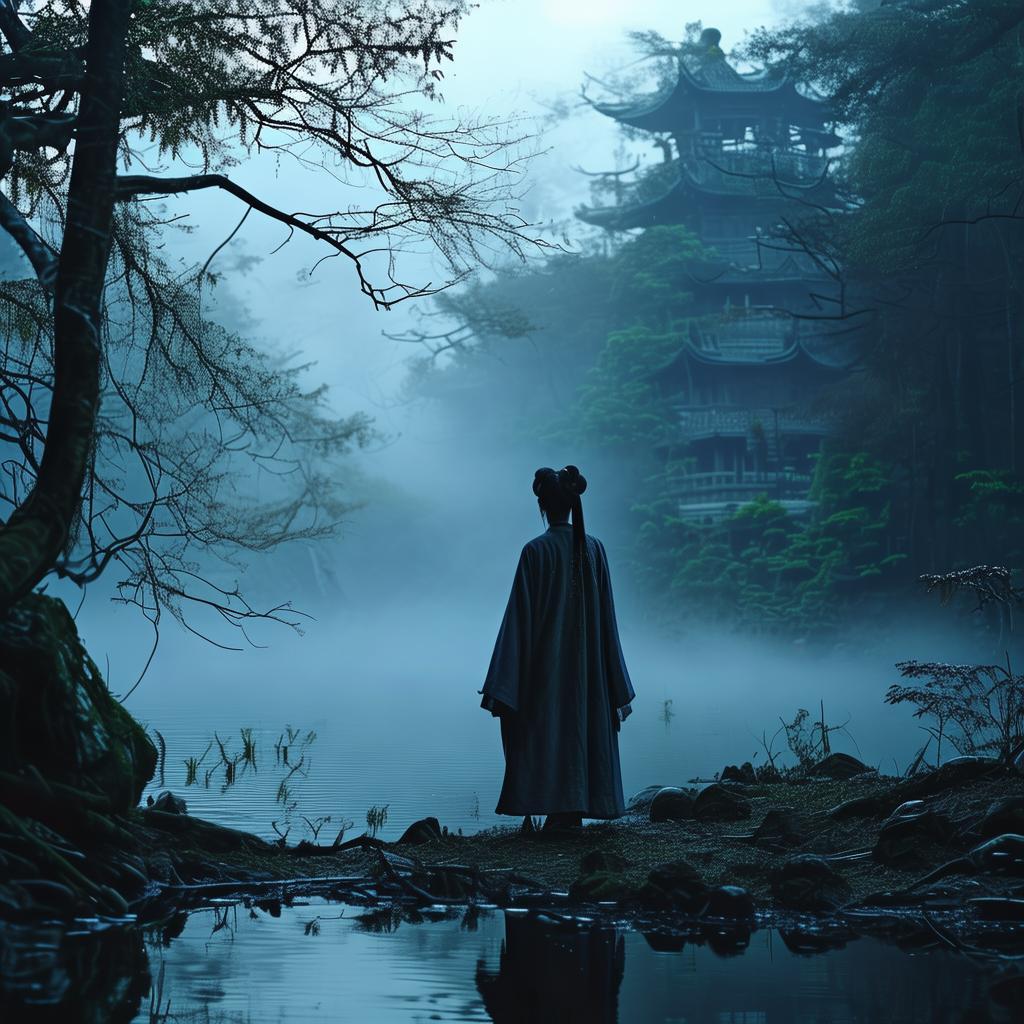
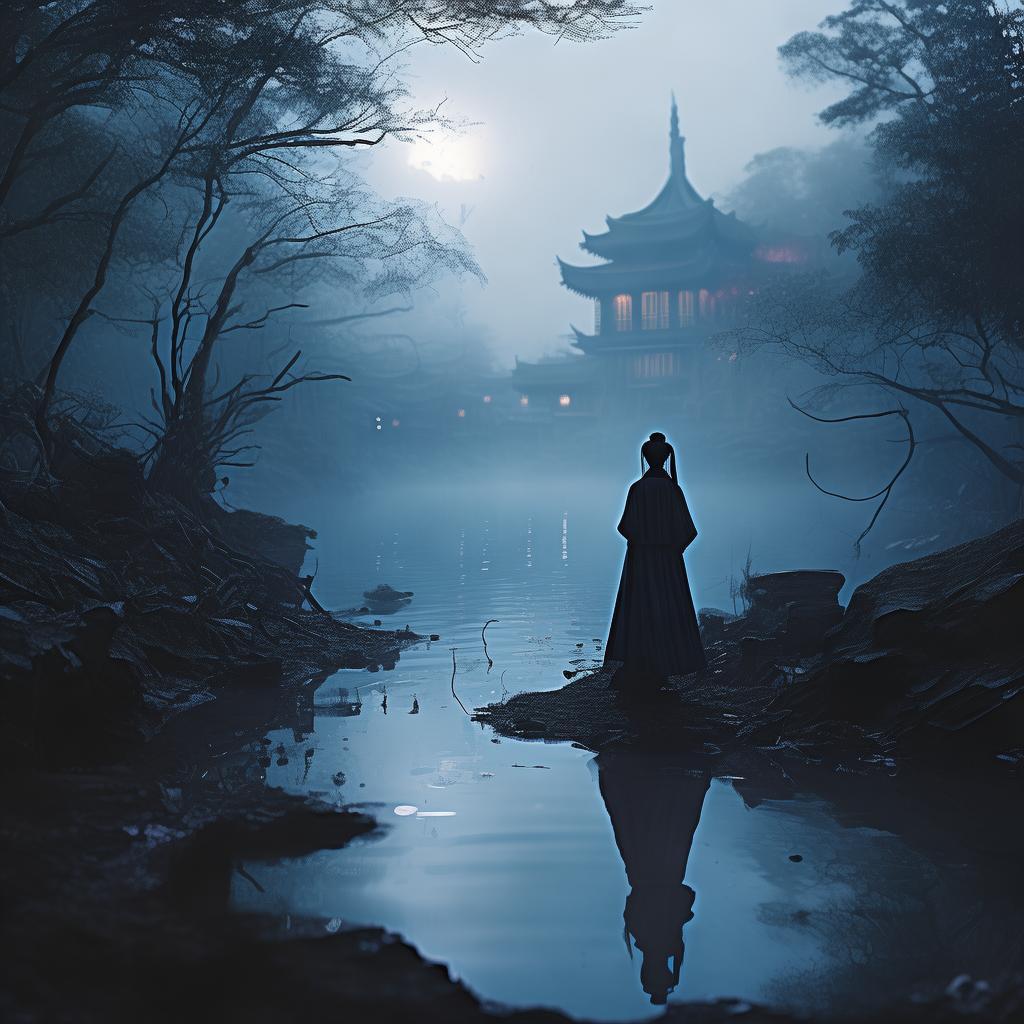
In the quaint town of Qinghe, there lived an esteemed scholar named Yuan Qing. Yuan Qing was not only renowned for his scholarly prowess but also for his moral integrity. His pursuit of knowledge was unyielding, and he was said to possess an insatiable thirst for enlightenment. It was during one of his frequent travels that he stumbled upon an ancient manuscript, hidden within the walls of an abandoned temple.
The manuscript was said to contain the secrets of the universe, knowledge that could elevate him to a level of understanding beyond the mere mortal realm. Yuan Qing, driven by curiosity and ambition, could not resist the allure of such a discovery. He began to study the ancient texts, and as he delved deeper, he found himself becoming more and more immersed in the world of the supernatural.
One night, as Yuan Qing was translating a particularly cryptic passage, he felt a strange presence in the room. It was a spirit, an ancient guardian of the knowledge contained within the manuscript. The spirit revealed itself to Yuan Qing and warned him that the knowledge he sought was not without its dangers. It spoke of a labyrinth of deceit, where truth and lies were indistinguishable, and where even the wisest could be led astray.

Unfazed by the spirit's warnings, Yuan Qing continued his quest. He believed that with his intelligence and moral compass, he could navigate the labyrinth and emerge victorious. The spirit, however, was not so easily dismissed. It began to test Yuan Qing's resolve, presenting him with riddles and challenges that seemed impossible to solve.
The first test came in the form of a riddle: "I am not alive, yet I grow; I don't have lungs, but I need air; I don't have a mouth, yet water kills me. What am I?" Yuan Qing pondered the riddle for hours, but it was the spirit that provided the answer: "A fire, for it is not alive, yet it grows; it requires air to sustain itself; and water extinguishes it."
The spirit then presented Yuan Qing with a series of tasks, each more difficult than the last. He was required to travel to distant lands, solve mysteries, and face off against cunning adversaries. Each task brought him closer to the heart of the labyrinth, and with each step, Yuan Qing became more and more aware of the spirit's true intentions.
The spirit was not interested in Yuan Qing's enlightenment; it was interested in his knowledge. The spirit's plan was to lead Yuan Qing to the center of the labyrinth, where the greatest treasure of all lay hidden: the ultimate knowledge that could control the very fabric of the universe. But the spirit knew that Yuan Qing, with his moral compass, would never submit to such a power.
To prevent Yuan Qing from reaching the center, the spirit resorted to deceit. It manipulated the scholar's mind, planting doubts and fears within him. Yuan Qing began to question his own abilities and his purpose. He started to see the world around him in a different light, and the lines between truth and deception blurred.
One day, as Yuan Qing was facing his most difficult challenge yet, he realized the truth. The spirit was not his guardian; it was his adversary. The labyrinth was not a path to enlightenment; it was a trap designed to destroy him. With this revelation, Yuan Qing's resolve was strengthened. He knew that he had to overcome the spirit's deceit and emerge victorious.
In a final act of defiance, Yuan Qing confronted the spirit head-on. He challenged it to a battle of wits, and the spirit, caught off guard, was defeated. Yuan Qing returned to his studies, having learned a valuable lesson about the dangers of knowledge and the importance of integrity.
The story of Yuan Qing's journey through the labyrinth of deceit serves as a cautionary tale. It reminds us that knowledge, while powerful, must be wielded with wisdom and moral fortitude. The pursuit of enlightenment is not without its risks, and one must be vigilant against the tricks and traps that the spirit of deceit can weave.
In the end, Yuan Qing emerged not as a conqueror of the labyrinth, but as a survivor. He had faced his own demons and had emerged wiser and more resolute. The knowledge he gained was not the power over the universe, but the power to discern truth from deceit, and to use his wisdom for the greater good.
✨ Original Statement ✨
All articles published on this website (including but not limited to text, images, videos, and other content) are original or authorized for reposting and are protected by relevant laws. Without the explicit written permission of this website, no individual or organization may copy, modify, repost, or use the content for commercial purposes.
If you need to quote or cooperate, please contact this site for authorization. We reserve the right to pursue legal responsibility for any unauthorized use.
Hereby declared.